Last week's headlines were primarily dominated by one thing, the initial public offering of Facebook stocks. The IPO was seen as one of the biggest initial offerings ever and by far the biggest in the tech industry in years. Fast forward a few days and that stock, which was initially offered at $38, has fallen steadily and now sits down nearly 20% at $32.
The handling of the IPO has been seen by many as a major flop and by some as grounds for lawsuits. Investors have filed lawsuits against not only Facebook but the company's CEO, lead underwriters—Morgan Stanley, Goldman Sachs, and JP Morgan and now Nasdaq OMX Group Inc., the company that manages the Nasdaq exchange which handles the Facebook stock.
Shareholders Wednesday filed a class action lawsuit against Facebook, CEO Mark Zuckerberg, Morgan Stanley, Goldman Sachs, and JP Morgan. The lawsuit alleges that that Facebook executives, including Zuckerberg, CFO David Ebersman, company board members, underwriter Morgan Stanley and others intentionally hid negative views of the company's revenue growth prior to last week's IPO. The analysts at Facebook's IPO underwriters had cut their estimates for the company in the middle of the IPO roadshow, however that information was seemingly not passed down to investors.
According to several reports the information about the estimate cut was conveyed to several major institutional investors who were considering buying Facebook stock, but not to smaller investors. These estimate cuts may have influenced the investment decisions of some these major players, weakening their position on the Facebook stock, and crucially, affecting the price at which they were willing to buy. This "selective disclosure" and the possibility that it weakened the stock position is at the heart of many of the lawsuits.
At the heart of it investors feel they should have had access to the same information the major investors had. Many feel that had they had access to that information they wouldn't have taken the gamble on the stock and subsequently wouldn't have lost money.
On top of the current class action lawsuit, the IPO also is reportedly being investigated by the U.S. Securities and Exchange Commission and the Financial Industry Regulatory Authority, an independent securities regulator. Both agencies are siding with investor and asking exactly what information was disclosed, when and to whom.
But the questions regarding the estimate and earrings cuts is hardly the only one surrounding the Facebook IPO.
According to Bloomberg, Phillip Goldberg, a Maryland investor, filed a lawsuit against NASDAQ this week alleging that it "badly mishandled" the opening hours of the IPO, effectively making it impossible for some traders to know if they owned Facebook stock or not. In his complaint filed yesterday in Manhattan federal court Goldberg alleges that he tried to both order and cancel requests for Facebook shares through an online Charles Schwab Corp. (SCHW) account the morning after the May 17 IPO.
He claims that he tried to make a series of buy orders online, which failed to go through at the time. Meanwhile, one of his trades was processed several hours later when Facebook's stock price had already dropped by more than $3. Goldberg believes that Nasdaq was negligent in failing to ensure trades were executed quickly and correctly, in not exercising effective quality control and in failing to oversee employees and contractors involved in executing the trades.
Goldberg is seeking unspecified damages and is seeking to move the lawsuit to class action status on behalf of investors who lost money because their buy, sell or cancellation orders for Facebook stock weren’t properly processed.
No matter how you look at it one thing is for certain, the Facebook IPO was a major disaster for everyone but Facebook's initial stock holders. The IPO netted the company a valuation in excess of $100 billion and turned several people into billionaires and several more into millionaires.
Wednesday, May 23, 2012
Tuesday, May 22, 2012
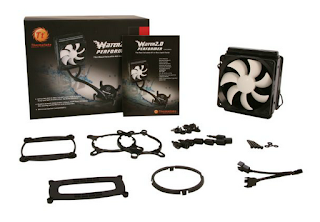
Review: Thermaltake WATER2.0 Performer and WATER2.0 Pro Water Cooling Systems
Thanks to several companies like Thermaltake water-cooling has gone mainstream. Units are cheaper, easier to use and more importantly more reliable, making it much easier for the average consumer to buy and install a cpu liquid cooling unit.
Being the major geek I am, you'd think that I'd have had some experience in the water-cooling arena in the past. Sadly this couldn't be further from the truth. So when Thermaltake introduced their WATER2.0 line of liquid cooling solutions and offered me the chance to review two of their newest units, the all-new WATER2.0 Performer and WATER2.0 Pro, I jumped at the chance.
For the mainstream consumer it breaks down to being what you lose in expandability you gain in reliability and ease of use. You don't have to worry about water leaks when adding in extra water-blocks or concerning yourself with routing extra tubing. You have a single block that fits on your CPU and one set of tubes running to your radiator. This makes for a really easy to use user friendly setup that just about anyone with a dab of tech know-how can install.
Universal compatibility for all new processors and current model sockets including: Intel: LGA 2011, 1366, 1155, 1156, 775 and AMD: FM1, AM3+, AM3, AM2+, AM2
Hardware Configuration
Software Used
Installation
Both units come with all the accessories needed to make them work with just about any newer socket and cpu. The instructions are fairly straight forward and easy to follow making for a hassle free install. The only areas we really had issues with were:
If this was a new build installing the back-plate wouldn't be any issue so we can skip that. The grommets and the poor markings, however were a bit of a setback. The marking on the plastic components was very hard to read. So at first we weren't sure if we had them in right. After grabbing a flash light for better vision we got things figured.
The major concern though was the fact that there isn't anything to hold the grommets in place. So when you are trying to line-up the mounting screws they tend to pop out the back of the mounting plate. This causes them to not be able to be tightened. Since I wasn't sure if it was easier to install everything outside the case or wait until the motherboard was mounted we ran into a few snags. We mounted the back-plat and remounted the motherboard, which was a mistake.
(Note: Install everything outside the case first it makes things a ton easier!)
For all three coolers we used the slowest possible fan speeds to try to keep noise levels down. Even at the highest temps fan speeds never reached much higher than 1200rpms. So we had some room headroom even at the top end of the spectrum. Results varied a bit with temps sometimes sliding higher and lower but these were generally the highest recorded results.
As you can see both coolers performed exceptionally well with the Water2.0 Pro edging out the Water2.0 Performer as should be expected. In my opinion it says a lot that they showed the rather significant differences they did over the Arctic Freezer 7 Pro, which is a great cooler in its own right. I had expected them to perform well but the differences were amazing.
Being new to liquid cooling it was really an eye opener to see the performance differences. Not only in extreme end of the test pushing the CPU to it's make but with the standard everyday cooling situations. It was also interested to see the faster cool down times and hearing the overall sound level differences. We didn't have the ability to test the sound levels, which would have been nice, but I will say the it was a significant change.
A few areas of concern!
The minor details we had with installation aside we had no other performance related concerns. There were a few other installation concerns that we thought we should address though.
The biggest concern we had came with the overall size of the coolers. Our Enermax Pandora 185 is an ATX mid tower with the ability to accept 120mm case fans. However, when we noticed the additional height of the radiators we thought that might pose a bit of a problem. As it was the fans fit just fine but we noticed there was going to be very little room, if any, between the bottom of our Coolermaster power supply and the top of the radiator. Luckily we made the tight fit work, we aren't sure how that will affect the cooling of the PSU but at least we got the coolers in.
(Note: This is another area you'll want to double check, measure to make sure you have clearance!)
Our second concerns was that our case has a tool-less design, with a pci-slot latch. We weren't sure how that would come into play with the fit or the need to add or change cards. Luckily while the latch is closed it's out of the way but once the fans and the coolers are mounted it is impossible to add or remove cards. (This could be a headache down the road!)
We've also noticed that the overall size of the Thermaltake Water 2.0 Pro takes up a lot of space inside our case. Air flow and access is a bit restricted to other components like our GPU and memory slots. We haven't noticed any issues, again though someone installing either of these units needs to be aware of the space requirements!
For more details on the Thermaltake "Water 2.0 Series" please checkout the Thermaltake product pages:
If you'd like to buy either unit you can do so now at Newegg -
Thermaltake WATER2.0 Pro All In One Liquid CPU Cooler |
Thermaltake WATER2.0 Performer All In One Liquid CPU Cooler
Being the major geek I am, you'd think that I'd have had some experience in the water-cooling arena in the past. Sadly this couldn't be further from the truth. So when Thermaltake introduced their WATER2.0 line of liquid cooling solutions and offered me the chance to review two of their newest units, the all-new WATER2.0 Performer and WATER2.0 Pro, I jumped at the chance.
Introducing the WATER2.0 Performer and WATER2.0 Pro
The Water "2.0" name denotes the progression and improvements that Thermaltake has made in the performance of the company's liquid cooling segment as well as the new approach which WATER2.0 solutions are taking. While traditional D.I.Y. (do-it-yourself) liquid cooling kits offer expandability, essentially the ability to cool both the CPU and GPU, the new mainstream 2.0 kits remove that option. The benefit of openly expandable kits is often the same thing that complicates installation and filling these coolers introduces a risk of mixing water and electronics. With the WATER2.0 kits Thermaltake specifically addresses these concerns by having a closed-loop design, meaning all the fluids that are required for maximum performance are pre-filled and sealed inside so the users do not need to handle any type of liquid during installation or operation.For the mainstream consumer it breaks down to being what you lose in expandability you gain in reliability and ease of use. You don't have to worry about water leaks when adding in extra water-blocks or concerning yourself with routing extra tubing. You have a single block that fits on your CPU and one set of tubes running to your radiator. This makes for a really easy to use user friendly setup that just about anyone with a dab of tech know-how can install.
Thermaltake Water2.0 Pro and Water2.0 Performer Specifications
| |||||||||||||||||||||||||||||||||||||||||||||||||||||||||||||
Universal compatibility for all new processors and current model sockets including: Intel: LGA 2011, 1366, 1155, 1156, 775 and AMD: FM1, AM3+, AM3, AM2+, AM2
How We Tested
Being that the Thermaltake Water 2.0 Pro and Thermaltake Water 2.0 Performer are meant for mainstream users we wanted to test both coolers on our everyday machine which we felt would best represent a mainstream build. This happens to be a bit older build but one that has ran tried and true for us for quite some time. The box is equipped with a Socket 775 Intel Pentium E5200 dual core CPU that we've overclocked to a nice stable 3.1Ghz and baseline cooling tests are done with an Arctic Freezer Pro 7. Using this build we tested temps at both stock and overclocked speeds, running everyday applications like Photoshop, Microsoft Office, WMP, and a few games. For stress testing we pushed the CPU to 100% usage running Prime 95.Hardware Configuration
- Processor: Intel Pentium E5200 Wolfdale 2.5GHz
- Settings: Overclocked to 3.1Ghz Vcore 1.40v
- Motherboard: ASUS PQ5 SE Plus
- ASUS Fan controls set to silent for slowest speeds
- Memory: 4 GBs DDR2 1066Mhz
- Hard disk: Western Digital 160 GB SATA
- Video card: EVGA 9600 GSO
- Power supply: Cooler Master Extreme 500W
- Case: Enermax Pandora 185 with zero case fans
Software Used
- Windows 7 Home Premium 64 bit SP1
- PhotoShop, FireFox, MS Office 2010, Windows Media Player
- Games -Wolfenstein, Painkiller
- Prime95 blended stress test
Installation
Both units come with all the accessories needed to make them work with just about any newer socket and cpu. The instructions are fairly straight forward and easy to follow making for a hassle free install. The only areas we really had issues with were:
A) Having to remove the motherboard to install a back-plate
B) The back plate grommets moving around
C) Poor marking on the plastic components
If this was a new build installing the back-plate wouldn't be any issue so we can skip that. The grommets and the poor markings, however were a bit of a setback. The marking on the plastic components was very hard to read. So at first we weren't sure if we had them in right. After grabbing a flash light for better vision we got things figured.
The major concern though was the fact that there isn't anything to hold the grommets in place. So when you are trying to line-up the mounting screws they tend to pop out the back of the mounting plate. This causes them to not be able to be tightened. Since I wasn't sure if it was easier to install everything outside the case or wait until the motherboard was mounted we ran into a few snags. We mounted the back-plat and remounted the motherboard, which was a mistake.
(Note: Install everything outside the case first it makes things a ton easier!)
Thermaltake Water2.0 Pro and Water2.0 Performer Performance
| |||||||||||||||||||||||||||||||||||||||
For all three coolers we used the slowest possible fan speeds to try to keep noise levels down. Even at the highest temps fan speeds never reached much higher than 1200rpms. So we had some room headroom even at the top end of the spectrum. Results varied a bit with temps sometimes sliding higher and lower but these were generally the highest recorded results.
As you can see both coolers performed exceptionally well with the Water2.0 Pro edging out the Water2.0 Performer as should be expected. In my opinion it says a lot that they showed the rather significant differences they did over the Arctic Freezer 7 Pro, which is a great cooler in its own right. I had expected them to perform well but the differences were amazing.
Being new to liquid cooling it was really an eye opener to see the performance differences. Not only in extreme end of the test pushing the CPU to it's make but with the standard everyday cooling situations. It was also interested to see the faster cool down times and hearing the overall sound level differences. We didn't have the ability to test the sound levels, which would have been nice, but I will say the it was a significant change.
Conclusion
Overall I'd really have to say that I was pretty impressed with the performance of both coolers. Being that it was a smaller unit and a bit cheaper I was slight more impressed with the Water 2.0 Performer than I was with the Water 2.0 Pro. The Performer gave us great cooling, a bit more flexibility with our case selection and in my mind a bit more band for our buck.A few areas of concern!
The minor details we had with installation aside we had no other performance related concerns. There were a few other installation concerns that we thought we should address though.
The biggest concern we had came with the overall size of the coolers. Our Enermax Pandora 185 is an ATX mid tower with the ability to accept 120mm case fans. However, when we noticed the additional height of the radiators we thought that might pose a bit of a problem. As it was the fans fit just fine but we noticed there was going to be very little room, if any, between the bottom of our Coolermaster power supply and the top of the radiator. Luckily we made the tight fit work, we aren't sure how that will affect the cooling of the PSU but at least we got the coolers in.
(Note: This is another area you'll want to double check, measure to make sure you have clearance!)
Our second concerns was that our case has a tool-less design, with a pci-slot latch. We weren't sure how that would come into play with the fit or the need to add or change cards. Luckily while the latch is closed it's out of the way but once the fans and the coolers are mounted it is impossible to add or remove cards. (This could be a headache down the road!)
We've also noticed that the overall size of the Thermaltake Water 2.0 Pro takes up a lot of space inside our case. Air flow and access is a bit restricted to other components like our GPU and memory slots. We haven't noticed any issues, again though someone installing either of these units needs to be aware of the space requirements!
For more details on the Thermaltake "Water 2.0 Series" please checkout the Thermaltake product pages:
- Water 2.0 Extreme
- Water 2.0 Pro
- Water 2.0 Performer (Note yet released)
If you'd like to buy either unit you can do so now at Newegg -
Thermaltake WATER2.0 Pro All In One Liquid CPU Cooler |
Thermaltake WATER2.0 Performer All In One Liquid CPU Cooler
Warning! Facebook Cancellation Request May Be Malware
Check your inbox carefully! That email that appears to be coming from Facebook asking if you’d like to cancel your accounts might actually be malware in disguise.
According to reports from ZDNet and Sophos, users have been receiving Facebook-centric e-mails that ask users if they wish to confirm or deny a Facebook account cancellation request. In fact these requests are from a malicious third party looking to install malware on your computer.
These very realistic looking Facebook e-mails ask users to follow a link to confirm a cancel requests to delete their account, something Facebook will never do! If followed, you are then offloaded to third-party Facebook application that will download a Java applet. Once the applet is loaded it will ask you to install a "Facebook Plugin" and continually harass the user to allow it run until they do – if the user allows the applet to run it will trigger a fake Adobe Flash update message. Once users download the update, they'll unsuspectingly install a backdoor Trojan to their computer, allowing attackers to monitor their activities and remotely access their computer.
Sophos security products detect the malware as Mal/SpyEye-B and Troj/Agent-WHZ. There is no word yet as to what information the malware is collecting, however it could be used to obtain just about anything.
For more details as well as screenshots of the email view the Sophos security alert posted here.
According to reports from ZDNet and Sophos, users have been receiving Facebook-centric e-mails that ask users if they wish to confirm or deny a Facebook account cancellation request. In fact these requests are from a malicious third party looking to install malware on your computer.
These very realistic looking Facebook e-mails ask users to follow a link to confirm a cancel requests to delete their account, something Facebook will never do! If followed, you are then offloaded to third-party Facebook application that will download a Java applet. Once the applet is loaded it will ask you to install a "Facebook Plugin" and continually harass the user to allow it run until they do – if the user allows the applet to run it will trigger a fake Adobe Flash update message. Once users download the update, they'll unsuspectingly install a backdoor Trojan to their computer, allowing attackers to monitor their activities and remotely access their computer.
Sophos security products detect the malware as Mal/SpyEye-B and Troj/Agent-WHZ. There is no word yet as to what information the malware is collecting, however it could be used to obtain just about anything.
For more details as well as screenshots of the email view the Sophos security alert posted here.
Google Closes Acquisition Of Motorola Mobility Names New Motorola Mobility CEO
Google is confirming today that they have closed the $12.5 Billion Acquisition of Motorola Mobility.
In a blog post released this morning Google CEO Larry Page writes:
Woodside has promised "fewer, bigger bets" meaning a simpler strategy: Fewer but bigger phone launches for Motorola Mobility, which will be an independent subsidiary of Google.
For more information read the Motorola Press Release.
In a blog post released this morning Google CEO Larry Page writes:
The phones in our pockets have become supercomputers that are changing the way we live. It’s now possible to do things we used to think were magic, or only possible on Star Trek--like get directions right from where we are standing; watch a video on YouTube; or take a picture and share the moment instantly with friends.
It’s why I’m excited to announce today that our Motorola Mobility deal has closed. Motorola is a great American tech company that has driven the mobile revolution, with a track record of over 80 years of innovation, including the creation of the first cell phone. We all remember Motorola’s StarTAC, which at the time seemed tiny and showed the real potential of these devices. And as a company who made a big, early bet on Android, Motorola has become an incredibly valuable partner to Google.Sanjay Jha will be stepping down from his current post as CEO of Motorola Mobility; Dennis Woodside, currently a senior vice president with Google, will take over the CEO post for the newly acquired company.
Woodside has promised "fewer, bigger bets" meaning a simpler strategy: Fewer but bigger phone launches for Motorola Mobility, which will be an independent subsidiary of Google.
For more information read the Motorola Press Release.
Blizzard Confirms Diablo 3 Accounts Accessed Denies Breach
In a post on the official Diablo III forums, a Blizzard community manager confirmed reports that several accounts may have been accessed by third parties but falls short of accepting blame. Instead, Blizzard is telling community members that the accounts were not hacked or otherwise compromised, instead insisting that the accounts were accessed via the normal log-in procedures using their usernames as passwords.
All the report share the same similar story: "I had my Diablo 3 account hacked today," states one player in this thread. "All my items gone and gold liquidated. Blizzard rolled it back to where I was a day and a half before. Meaning I lost around 20 hours of game time play. My password is a random combination of capitalized and uncapitalized letters, numbers, and special characters. My security question answer is also unknowable by anyone but me."
Blizzard is blaming the problem on passwords that aren't backed up by an official Battle.net authenticator. However this doesn't seem t be the case as Diablo 3 players are reporting hacks even after using the authenticator. They have also been able to watch the hacking take place in real time while taking screenshots in the process.
Related Articles:
We've been taking the situation extremely seriously from the start, and have done everything possible to verify how and in what circumstances these compromises are occurring. Despite the claims and theories being made, we have yet to find any situations in which a person's account was not compromised through traditional means of someone else logging into their account through the use of their password. While the authenticator isn't a 100% guarantee of account security, we have yet to investigate a compromise report in which an authenticator was attached beforehand.Reports began surfacing over the weekend with hundreds of users registering complaints that their accounts have been raided and their virtual, money and goods on Blizzard's Battle.net gaming site had been stolen. Many report being the victims of account takeovers while they were online, suggesting that hackers may be taking advantage of a vulnerability in Blizzard's software or Battle.net gaming platform.
If your account has been hacked, please view the previous post for information on contacting our support department.
All the report share the same similar story: "I had my Diablo 3 account hacked today," states one player in this thread. "All my items gone and gold liquidated. Blizzard rolled it back to where I was a day and a half before. Meaning I lost around 20 hours of game time play. My password is a random combination of capitalized and uncapitalized letters, numbers, and special characters. My security question answer is also unknowable by anyone but me."
Blizzard is blaming the problem on passwords that aren't backed up by an official Battle.net authenticator. However this doesn't seem t be the case as Diablo 3 players are reporting hacks even after using the authenticator. They have also been able to watch the hacking take place in real time while taking screenshots in the process.
Related Articles:
- Report: Diablo III Users Find Accounts Hacked, Gold Stolen And New 'Mystery' Friends
- Blizzard addresses Diablo III account thefts
- Blizzard Responds to Diablo 3 Account Hacks
Friday, May 18, 2012
Microsoft Renews Free Xbox 360 Back-To-School Promo
Microsoft has announced plans to renew its popular Xbox 360 back-to-school promotion, kicking off the deal this Sunday with an offer of a free Xbox 360 game console to eligible U.S. students who buy a new Windows 7 PC.
According to Microsoft's blog post the promotion will be fairly similar to last year's. To be eligible you'll need to be either a U.S. (or Canadian) high school or college students with proof of status -- a student ID card or an email address that ends in .edu. You must purchase a Windows 7 PC for $699 ($599 for Canada) or more from one of the qualifying retailers or the Microsoft store. Just like last year's promotion you will then receive a free 4GB Xbox 360.
For this year's promotion Microsoft has added a few more retailers to the mix. Participating retailers in the US include Best Buy, Dell.com, Fry’s Electronics, HPDirect.com, Microsoft Stores, and NewEgg.com. In Canada, they include Best Buy, Dell.ca, Future Shop, Staples and The Source.
To take advantage of this offer or for more information, check with participating retailers as they may have some special restrictions on availability. Students or their parents must provide valid student identification as defined by the participating retailer.
Depending on when you make your purchase of your new Windows 7 PC you may also qualify for a free or low cost upgrade to Windows 8 Pro when the new operating system launches later this year. Microsoft has not unveiled a Windows 8 upgrade program, but recent rumors have pegged an announcement to the first week of June.
Related Articles: Buy a New HP PC, Get a Free Xbox 360
UPDATE 5/21: Find out more about this offer on the Windows Facebook Page at www.windows.com/freexbox.
According to Microsoft's blog post the promotion will be fairly similar to last year's. To be eligible you'll need to be either a U.S. (or Canadian) high school or college students with proof of status -- a student ID card or an email address that ends in .edu. You must purchase a Windows 7 PC for $699 ($599 for Canada) or more from one of the qualifying retailers or the Microsoft store. Just like last year's promotion you will then receive a free 4GB Xbox 360.
For this year's promotion Microsoft has added a few more retailers to the mix. Participating retailers in the US include Best Buy, Dell.com, Fry’s Electronics, HPDirect.com, Microsoft Stores, and NewEgg.com. In Canada, they include Best Buy, Dell.ca, Future Shop, Staples and The Source.
To take advantage of this offer or for more information, check with participating retailers as they may have some special restrictions on availability. Students or their parents must provide valid student identification as defined by the participating retailer.
Depending on when you make your purchase of your new Windows 7 PC you may also qualify for a free or low cost upgrade to Windows 8 Pro when the new operating system launches later this year. Microsoft has not unveiled a Windows 8 upgrade program, but recent rumors have pegged an announcement to the first week of June.
Related Articles: Buy a New HP PC, Get a Free Xbox 360
UPDATE 5/21: Find out more about this offer on the Windows Facebook Page at www.windows.com/freexbox.
Thursday, May 17, 2012
Verizon To Kill Unlimited Data, Will Honor Grandfathered Plans
Verizon customers were hit with some bad news and false reports on Wednesday when the company outlined its goals to kill off unlimited data plans and instead move customers to shared data plans. Unfortunately many people, myself included, incorrectly read the report and believed that meant that Verizon would no longer honor grandfathered plans and would ultimately kill unlimited data plans the instant that shared data plans were introduced.
Looking to clarify its position Verizon has released a statement as to what will actually happen.
Customers with unlimited plans will get to keep their unlimited plans. But when shared data plans become available, the unlimited option will no longer be available to customers when they buy a new device at a subsidized price, usually with a two-year service contract. In other words, customers that are now on grandfathered plans will keep their unlimited plans so long as they don't want to upgrade their phone as a discounted price. If they need a new phone they will either have to pay full price or loose their old plan and be ported over to the new shared plans.
Verizon’s e-mailed statement, in full:
Source: NY Times
Looking to clarify its position Verizon has released a statement as to what will actually happen.
Customers with unlimited plans will get to keep their unlimited plans. But when shared data plans become available, the unlimited option will no longer be available to customers when they buy a new device at a subsidized price, usually with a two-year service contract. In other words, customers that are now on grandfathered plans will keep their unlimited plans so long as they don't want to upgrade their phone as a discounted price. If they need a new phone they will either have to pay full price or loose their old plan and be ported over to the new shared plans.
Verizon’s e-mailed statement, in full:
– Customers will not be automatically moved to new shared data plans. If a 3G or 4G smartphone customer is on an unlimited plan now and they do not want to change their plan, they will not have to do so.In short, Verizon is hoping the death of grandfathered unlimited data plans will come by way of attrition. They hope when all the people with unlimited data plans want new devices they will give up their old plans for a cheaper price on a new phone.
– When we introduce our new shared data plans, Unlimited Data will no longer be available to customers when purchasing handsets at discounted pricing.
– Customers who purchase phones at full retail price and are on an unlimited smartphone data plan will be able to keep that plan.
– The same pricing and policies will be applied to all 3G and 4GLTE smartphones.
Source: NY Times
Fake Google Chrome Installer Is Trojan In Disguise
Researchers at Trend Micro have discovered a fake Google Chrome installer named ChromeSetup.exe, that is actually a bank-account-stealing trojan in disguise. he Trojan at present appears to target users in Brazil and Peru however indications are the malware is a work in progress and could potentially affect US users as well.
According to to their findings an analysis of the file ChromeSetup.exe done by Trend Micro's security researchers has verified that it is a multi-component BANKER malware detected as TSPY_BANKER.EUIQ. Once running on a system, TSPY_BANKER.EUIQ sends information such as the infected system’s IP address and operating system name to a specific IP address. It also downloads a configuration file that contains information it uses to redirect access to fake banking pages whenever a user attempts to visit certain banking websites.
So far Trend Micro has detected the 3 different binary files have been downloaded from several of the following popular URLs:
"While we may have a complete picture of this particular attack, the one missing piece now is the same thing that made us notice this malware from the millions of data that we have from our threat intelligence – how it is able to redirect user accesses from normal websites like Facebook or Google to its malicious IP to download malware," Cayanan wrote. "We will continue our investigation related to this incident and will update this blog with our findings.
"Online threats will continue to evolve and find ways into systems. As such, traditional web blocking technologies may fail to block access to malicious URLs, especially when these are masked with the use of legitimate domains like those of Facebook or Google."
According to to their findings an analysis of the file ChromeSetup.exe done by Trend Micro's security researchers has verified that it is a multi-component BANKER malware detected as TSPY_BANKER.EUIQ. Once running on a system, TSPY_BANKER.EUIQ sends information such as the infected system’s IP address and operating system name to a specific IP address. It also downloads a configuration file that contains information it uses to redirect access to fake banking pages whenever a user attempts to visit certain banking websites.
So far Trend Micro has detected the 3 different binary files have been downloaded from several of the following popular URLs:
- hxxp://br.msn.com/ChromeSetup.exe
- hxxp://www.facebook.com.br/ChromeSetup.exe
- hxxp://www.facebook.com/ChromeSetup.exe
- hxxp://www.globo.com.br/ChromeSetup.exe
- hxxp://www.google.com.br/ChromeSetup.exe
- hxxp://www.terra.com.br/ChromeSetup.exe
"While we may have a complete picture of this particular attack, the one missing piece now is the same thing that made us notice this malware from the millions of data that we have from our threat intelligence – how it is able to redirect user accesses from normal websites like Facebook or Google to its malicious IP to download malware," Cayanan wrote. "We will continue our investigation related to this incident and will update this blog with our findings.
"Online threats will continue to evolve and find ways into systems. As such, traditional web blocking technologies may fail to block access to malicious URLs, especially when these are masked with the use of legitimate domains like those of Facebook or Google."
Tuesday, May 15, 2012
Wikipedia Warns Users "Ads May Mean You Have Malware"
In an official statement released today Wikipedia warned its millions of visitors that if they see ads for anything except Wikipedia's own fundraising appeal, which occurs at the end of the year, here's a good chance their computer is infected with malware.
"We never run ads on Wikipedia," the online encyclopedia said in its statement. "Wikipedia is funded by more than a million donors, who give an average donation of less than 30 dollars. We run fundraising appeals, usually at the end of the year. If you’re seeing advertisements for a for-profit industry (see screenshot below for an example) or anything but our fundraiser, then your web browser has likely been infected with malware."
Malware installed on your computer may inject advertising into a page on popular websites, such as the above example of an article being displayed from an infected computer. This is only one of a few examples that Wikipedia has said they have seen in the wild. Note the tiny text "ads not by this site" immediately below the ad, which may or may not appear next to these types of injected advertisements.
Wikipedia suggests you browse using a secure, encrypted HTTPS connection, disable browser add-ins, and run anti-spyware and anti-virus software on your computer. Personally I'd suggest anyone seeing ads on Wikipedia run scans with Ad-Aware and Malwarebytes as well as running scans with anti-virus software like AVG to make sure there aren't any other infections.
"We never run ads on Wikipedia," the online encyclopedia said in its statement. "Wikipedia is funded by more than a million donors, who give an average donation of less than 30 dollars. We run fundraising appeals, usually at the end of the year. If you’re seeing advertisements for a for-profit industry (see screenshot below for an example) or anything but our fundraiser, then your web browser has likely been infected with malware."
Malware installed on your computer may inject advertising into a page on popular websites, such as the above example of an article being displayed from an infected computer. This is only one of a few examples that Wikipedia has said they have seen in the wild. Note the tiny text "ads not by this site" immediately below the ad, which may or may not appear next to these types of injected advertisements.
Wikipedia suggests you browse using a secure, encrypted HTTPS connection, disable browser add-ins, and run anti-spyware and anti-virus software on your computer. Personally I'd suggest anyone seeing ads on Wikipedia run scans with Ad-Aware and Malwarebytes as well as running scans with anti-virus software like AVG to make sure there aren't any other infections.
Google 2012 Model Your Town Competition Winner Announced
Googlers all around the world were invited to build 3D models of the buildings in their community for a chance to win $25,000 for the town's public school district or an individual school in the 2012 Google Model Your Town Competition. Today Google has announced the winning team, two mean Josetxo Perez Fernandez, 36, is a professional who works in computer administration; and Pedro Domecq Aguirre, 45, is a programmer, 3D data specialist and network administrator from Getaria, Gipuzkoa, Spain.
The two men created a pretty cool gallery of works that can be seen via the Team Getaria’s collection in the 3D Warehouse. Google even has some video of their work on the winners’ page.
At final count over 49,000 votes were cast to determine the winner of the Google Model Your Town Competition from six finalists. The other five finalists, and to all the other entrants who collectively modeled almost 25,000 local landmarks are now available for all to enjoy in Google Earth’s 3D Buildings layer.
The two men created a pretty cool gallery of works that can be seen via the Team Getaria’s collection in the 3D Warehouse. Google even has some video of their work on the winners’ page.
At final count over 49,000 votes were cast to determine the winner of the Google Model Your Town Competition from six finalists. The other five finalists, and to all the other entrants who collectively modeled almost 25,000 local landmarks are now available for all to enjoy in Google Earth’s 3D Buildings layer.
Monday, May 14, 2012
Windows 8 Upgrade Promotion Details Leaked
With the past few Windows updates Microsoft has offered OEM customers and would be early adopters a deal which features low-cost, or free upgrades from the current operating system on their pre-built computers to the soon to be released next generation OS. This time around it looks like MS is going to change the details of that promotion and add a bit off a cost, but with a bit more reward.
Reports from Neowin and popular Windows blogger Paul Thurrott are indicating the confirmation of a Windows 8 Pro promotion at the cost of just $14.99 USD. The promotion will be for all Windows 7 systems running the Home Basic edition or higher and will give customers the right to upgrade to Windows 8 Pro edition. While the added fee is something new the addition of the ability to upgrade from any previous version of Windows 7 to the new Pro Edition of Windows 8 is something new and a bit of a benefit for most users.
In the past users were offered an equivalent edition upgrade Home to Home, Pro to Pro ect. According to the reports this promotion is for any edition, Home Premium and up, to get an upgrade to Pro. So it's kind of like an AnyTime Upgrade and an OS upgrade all wrapped in one.
According to the leaked marketing material and the sources cites anyone purchasing a pre-built Windows 7 system (Dell, HP ect) after June 2, when Microsoft’s promotional campaign begins, will be eligible for an upgrade from their current Windows 7 Operating system to Windows 8 Pro at that price. That price tag is also specific to the US; regional pricing variations will likely apply.
More details on the promotion will likely surface as we get closer to the June 2nd starting date so stay tuned and we'll update you ass needed.
Reports from Neowin and popular Windows blogger Paul Thurrott are indicating the confirmation of a Windows 8 Pro promotion at the cost of just $14.99 USD. The promotion will be for all Windows 7 systems running the Home Basic edition or higher and will give customers the right to upgrade to Windows 8 Pro edition. While the added fee is something new the addition of the ability to upgrade from any previous version of Windows 7 to the new Pro Edition of Windows 8 is something new and a bit of a benefit for most users.
In the past users were offered an equivalent edition upgrade Home to Home, Pro to Pro ect. According to the reports this promotion is for any edition, Home Premium and up, to get an upgrade to Pro. So it's kind of like an AnyTime Upgrade and an OS upgrade all wrapped in one.
According to the leaked marketing material and the sources cites anyone purchasing a pre-built Windows 7 system (Dell, HP ect) after June 2, when Microsoft’s promotional campaign begins, will be eligible for an upgrade from their current Windows 7 Operating system to Windows 8 Pro at that price. That price tag is also specific to the US; regional pricing variations will likely apply.
More details on the promotion will likely surface as we get closer to the June 2nd starting date so stay tuned and we'll update you ass needed.
Using Street View To Preview Your Summer Vacation
Taking a little summer vacation this year? Perhaps you are visiting one of your favorite amusement parks, zoos or other points of interest. Well thanks to Google's Street View partner program you might may be able to preview that summer vacation before you go.
Over the past few years Street View has added 360-degree panoramic views of several notable attractions around the US. For example, if you’re on the West Coast and want to visit the world famous San Diego Zoo, go to Google Maps and search for "San Diego Zoo." Here you'll find an interactive virtual tour that will allow you to drag Pegmen to some of your favorite spots inside the zoo. You can also virtually explore the zoos in Honolulu, Denver, Detroit and a few more key locations.
For those of us that love the excitement of rides Street View has imagery and virtual tours of some of the largest amusement parks across the country. You can visit Universal Studios in Orlando, Florida, or preview imagery from Six Flags Discovery Kingdom, Universal Studios Hollywood, Santa Cruz Beach Boardwalk, Great America, Busch Gardens, and Wet ‘n’ Wild Hawaii. You can zoom in and out on the map to get and overhead view of the entire park, then locate a ride, booth or attraction you want and simply zoom in on that location to see it up close and personal.
If you are a racing geek like me and like to watch all things fast you can checkout Mazda Raceway Laguna Seca or one of my favorites Infineon Raceway. You'll be able to experience a turn by turn tour of the entire race track, pit road and even the grandstands. For those that like things a little more mellow and relaxing checkout Balboa Park, the Chicago Botanic Garden, or Diamond Head park and trail. Here you can stroll along the path and take in the relaxing views just like you were right there in person.
For more ideas checkout the full list of popular U.S. locations from the comfort of your desktop or mobile device and to see more popular locations, check out the entire Street View Gallery.
Over the past few years Street View has added 360-degree panoramic views of several notable attractions around the US. For example, if you’re on the West Coast and want to visit the world famous San Diego Zoo, go to Google Maps and search for "San Diego Zoo." Here you'll find an interactive virtual tour that will allow you to drag Pegmen to some of your favorite spots inside the zoo. You can also virtually explore the zoos in Honolulu, Denver, Detroit and a few more key locations.
For those of us that love the excitement of rides Street View has imagery and virtual tours of some of the largest amusement parks across the country. You can visit Universal Studios in Orlando, Florida, or preview imagery from Six Flags Discovery Kingdom, Universal Studios Hollywood, Santa Cruz Beach Boardwalk, Great America, Busch Gardens, and Wet ‘n’ Wild Hawaii. You can zoom in and out on the map to get and overhead view of the entire park, then locate a ride, booth or attraction you want and simply zoom in on that location to see it up close and personal.
If you are a racing geek like me and like to watch all things fast you can checkout Mazda Raceway Laguna Seca or one of my favorites Infineon Raceway. You'll be able to experience a turn by turn tour of the entire race track, pit road and even the grandstands. For those that like things a little more mellow and relaxing checkout Balboa Park, the Chicago Botanic Garden, or Diamond Head park and trail. Here you can stroll along the path and take in the relaxing views just like you were right there in person.
For more ideas checkout the full list of popular U.S. locations from the comfort of your desktop or mobile device and to see more popular locations, check out the entire Street View Gallery.
"Welcome to Life" A Geeks View Of What Your Digital Afterlife Might Be
Ever thought about the digital afterlife, you know the one. The geeks dream of uploading your collective consciousness onto a server somewhere and keeping yourself alive through computer interface and online interaction. Well blogger Tom Scott created a video that has put things into perspective for us and now we are re-thinking what that afterlife might be!
In a video called “Welcome to Life,” Scott shows his view of what a digital afterlife might be like. Even more more specifically, he touches on the corporate side of things, with plans, digital advertising, terms of service and even copyright concerns. The video gives viewers a glimpse at what that first after death interaction might consist of.
Given the current state of the internet and the world we live in you have to admit this might not be far from the reality of what could happen. I mean should the technology every be created of course!
Video via Tom Scott
In a video called “Welcome to Life,” Scott shows his view of what a digital afterlife might be like. Even more more specifically, he touches on the corporate side of things, with plans, digital advertising, terms of service and even copyright concerns. The video gives viewers a glimpse at what that first after death interaction might consist of.
Given the current state of the internet and the world we live in you have to admit this might not be far from the reality of what could happen. I mean should the technology every be created of course!
Video via Tom Scott
Friday, May 11, 2012
Enter The EVGA Ivy Bridge Sweepstakes
Those awesome folks over at Intel & EVGA are teaming up to bring you another great contest: The Ivy Bridge on the River Prize Pack! Including almost all the parts you'll need to build a screaming gaming machine.
(1) Intel Core i7 3770K CPU
(1) EVGA GTX 680 Video Card
(1) EVGA Superclock CPU Cooler
To enter just follow the instructions below:
Grand Prize:
(1) EVGA Z77 FTW Motherboard(1) Intel Core i7 3770K CPU
(1) EVGA GTX 680 Video Card
(1) EVGA Superclock CPU Cooler
To enter just follow the instructions below:
- Read over the official rules on this page
- Read over the EVGA privacy policy
- Go to EVGA's Facebook and click on the EVGA Ivy Bridge Sweepstakes app
- Alternatively, go directly to the EVGA Ivy Bridge Sweepstakes app
- Click on Enter Sweepstakes
- "Like" both EVGA and Intel
- Fill out your information
- Share with your friends
Facebook, Instagram Not A Done Deal Yet As FTC Launches Probe
Facebook made major headlines with its $1 billion acquisition of photo-sharing app Instagram. However that deal is hardly closed as it has been reportedly delayed until the Federal Trade Commission can give it the once-over.
According to reports by several news sources, the FTC is examining the deal on competition grounds, a move that could push the close of the deal into the third quarter or even perhaps block the deal if there is enough evidence to warrant such a move. The FTC has asked rivals Google and Twitter for their input on the deal, though it was not revealed what information it was seeking.
According to the Financial Times, who originally broke the news, at the heart of the FTC is investigation is the potential for any anti-competitive practices. The question would seemingly be would Facebook's Instagram acquisition give the company an undo leverage in a particular market. The information the FTC is seeking can be about the markets — here, social networks, photo sharing, and mobile — what the companies do, what their operations are, and whether they are competitors in certain markets and how their merger could impact competition.
While this might make for good headlines these are fairly routing practices for any acquisition over $68.2 million. Despite that fact it could potentially hurt Facebook for the time being. The social network cannot use Instagram until the investigation is closed and with the IPO reportedly on its way investor might see this as a major setback.
According to reports by several news sources, the FTC is examining the deal on competition grounds, a move that could push the close of the deal into the third quarter or even perhaps block the deal if there is enough evidence to warrant such a move. The FTC has asked rivals Google and Twitter for their input on the deal, though it was not revealed what information it was seeking.
According to the Financial Times, who originally broke the news, at the heart of the FTC is investigation is the potential for any anti-competitive practices. The question would seemingly be would Facebook's Instagram acquisition give the company an undo leverage in a particular market. The information the FTC is seeking can be about the markets — here, social networks, photo sharing, and mobile — what the companies do, what their operations are, and whether they are competitors in certain markets and how their merger could impact competition.
While this might make for good headlines these are fairly routing practices for any acquisition over $68.2 million. Despite that fact it could potentially hurt Facebook for the time being. The social network cannot use Instagram until the investigation is closed and with the IPO reportedly on its way investor might see this as a major setback.
The Development of First Generation Mobile Phones
Within the last few decades, technology has grown exponentially. Today we are able to do so much more than previous generations even dreamed of doing. One particular area of technology that has seen significant growth is mobile phone technology. This area has evolved over the years and can be traced through the generations.
The 1980s featured the first generation of mobile phones. This generation is set apart from others by its usage of multiple cell sites. By using multiple cell sites, users were better able to maintain their signal. While on their phone, they could travel from one area to the next, all the while covered by different cells. During the switch between cell areas, the call could continue. During this generation, mobile phones became more portable. This was significant for the later generation of mobile phone development.
The first commercial cellular network was launched by the Japanese in 1979. Known as 1G, this network was able to cover the expansive Tokyo area, reaching 20 million people. In order to accommodate such a large area, the region was further divided up into 23 base stations. Five years later, the entire country was networked for mobile phone usage. This was the first nationwide 1G network in the world.
The second part of the world to create a 1G network was in Scandinavia. The countries of Sweden, Norway, Finland and Denmark collaborated to create such a network in 1981. This particular network was unique in that it did allow users to roam internationally. The United Kingdom, Canada and Mexico also jumped on the bandwagon and created networks. In 1983, the U.S. went online with their 1G network. Here the first hand held mobile phone was operational with this network. In order to do this, the cell sites had to overlap to provide a stronger signal. Still, calls were often lost as this technology was still being developed.
Mobile phones have come a long way since the 1G networks. Data upload and download rates are much faster, and call quality is better than ever before. New mobile handsets have taken advantage of the available technology, and provide many services that would have seemed impossible when the first networks were created. If you want to find a new mobile phone, you can visit Dial-A-Phone.co.uk to see what handsets are available.
The 1980s featured the first generation of mobile phones. This generation is set apart from others by its usage of multiple cell sites. By using multiple cell sites, users were better able to maintain their signal. While on their phone, they could travel from one area to the next, all the while covered by different cells. During the switch between cell areas, the call could continue. During this generation, mobile phones became more portable. This was significant for the later generation of mobile phone development.
The first commercial cellular network was launched by the Japanese in 1979. Known as 1G, this network was able to cover the expansive Tokyo area, reaching 20 million people. In order to accommodate such a large area, the region was further divided up into 23 base stations. Five years later, the entire country was networked for mobile phone usage. This was the first nationwide 1G network in the world.
The second part of the world to create a 1G network was in Scandinavia. The countries of Sweden, Norway, Finland and Denmark collaborated to create such a network in 1981. This particular network was unique in that it did allow users to roam internationally. The United Kingdom, Canada and Mexico also jumped on the bandwagon and created networks. In 1983, the U.S. went online with their 1G network. Here the first hand held mobile phone was operational with this network. In order to do this, the cell sites had to overlap to provide a stronger signal. Still, calls were often lost as this technology was still being developed.
Mobile phones have come a long way since the 1G networks. Data upload and download rates are much faster, and call quality is better than ever before. New mobile handsets have taken advantage of the available technology, and provide many services that would have seemed impossible when the first networks were created. If you want to find a new mobile phone, you can visit Dial-A-Phone.co.uk to see what handsets are available.
Thursday, May 10, 2012
Mozilla Complaints Target ARM-based Windows Why Not Apple?
Today's headlines have been full of posts regarding Mozilla's complaints about Microsoft’s plans to only allow Internet Explorer to run on at an elevated level in the "Classic" mode of Windows on ARM, better known as Windows RT. The complaint is that this will give IE and unfair advantage over other browsers that won't have access to many advanced APIs that are necessary for creating a browser with the same capabilities as the traditional desktop version of the application.
Microsoft has made its intentions clear, they would enable third-parties to build Metro-style apps, which would run on Windows RT however they will not run in the elevated Windows Classic mode. Both Mozilla and Google announced that they were building Metro-style versions of their browsers. For both companies the problem lies in the fact that Microsoft is only enabling IE 10 to run on the Windows RT desktop.
So what is the issue?
In a post on the issue, Asa Dotzler, the software engineer directing Mozilla’s development for Windows 8, said:
Dotzler elaborated more on the issue in a second blog post and even gave a bit great insight into the issues he feels Mozilla and Firefox will face. "It's not precisely "running a browser in Classic" that matters for Windows on ARM. It's that running a browser in Classic is the only way that Microsoft has allowed us to get access to the APIs that a browser needs to deliver modern capabilities and performance in Classic AND Metro," Dozler write.
Effectively there are separate levels of access for Windows RT. One for metro only style apps and one for classic mode system apps. Microsoft will only allow specific apps to be elevated to access all the features of classic mode. Leaving Mozilla, Google and other third party vendors the option to use metro. These apps have access to some cool new Metro features but they live in a Metro sandbox and cannot use any of the more powerful features available from the Classic environment.
Why is this important?
Mozilla isn't so much worried about the Windows RT and tablet environment. They are more concerned that ARM will be migrating to laptop, full blown tower PCs and all-in-one PCs in the future. To them this is not a tablet-only concern rather a concern that the Windows RT environment will be used as a standard Windows replacement on more devices. They feel that if the exclusion is made now they might loose out on the chance to be competitive in the ARM marketplace down the road.
I'm personally not convinced but this is the basis of their arguments.
So why not fire back at Apple for doing the same thing?
Personally I've asked for years why Google and Mozilla haven't fired these letters expressing Antitrust concerns over the walls of Apple garden. Apple does the very same thing they are charging Microsoft with in restricting browser and application access to iOS. Apple uses they same sandboxing under the same guise that Microsoft is. According to Microsoft Windows RT eliminates many of the programming tricks used by Win32 app developers, including “background processes, polling loops, timers, system hooks, startup programs, registry changes, kernel mode code, admin rights, unsigned drivers, add-ins, or a host of other common techniques.” These are typically responsible for unreliable, memory-hogging, performance-draining apps that Apple all to often blocks from the AppStore.
So why the double standard you may ask. Well Dotzler makes it clear for us, “Apple is not a convicted monopolist that has legally binding commitments to not block access to browser-related APIs like Microsoft.” Basically he is saying because Microsoft has prior commitments to the DOJ and responsibilities against anticompetitive behavior they are the easier target! A view that I feel is very hypocritical!
If you are going to fire off shots at Microsoft for antitrust concerns despite their lack of prescience in two major markets, two markets by the way where your browsers are already being blocked then why not fire the same shots at Apple which holds the lions share of those markets. Mozilla is charging that Windows on ARM may some day be a major market player, yet iOS is already one and they aren't concerned with sharing that market? What gives here?
Will we see anything come of this?
How far will Mozilla and Google push? Well as of right now that isn't clear. Whether Mozilla or Google wants to elevate its complaints into a formal antitrust complaint is uncertain. Given that ARM-based Windows devices have a market share of exactly 0% right now, with no guarantee that the new platform will succeed, it seems unlikely that even if they did there would be much made of it. The question then would come down to whether or not Windows on ARM is just Windows on another device or a new separation for Microsoft. Depending on the view of the OS the DOJ or even the European Union might be interested in the case. However given that both companies have full access to the enormous base of x86 and x64 PCs and full access to the rest of the Windows 8 line-up it would be doubtful we'd see anything in the way of a full blown lawsuit.
In addition, it’s hard to argue that consumers are being damaged. In the 1990s, Microsoft was accused of having a chokehold on the Internet with its Windows monopoly. In 2012, with the proliferation of Internet-connected mobile devices, Apple’s strength in Mac sales, and iPad’s stranglehold on the tablet market, can anyone make a plausible case that consumers will lack choice?
Microsoft has made its intentions clear, they would enable third-parties to build Metro-style apps, which would run on Windows RT however they will not run in the elevated Windows Classic mode. Both Mozilla and Google announced that they were building Metro-style versions of their browsers. For both companies the problem lies in the fact that Microsoft is only enabling IE 10 to run on the Windows RT desktop.
So what is the issue?
In a post on the issue, Asa Dotzler, the software engineer directing Mozilla’s development for Windows 8, said:
Here's what's going on. For Windows on X86, Microsoft is giving other browsers basically the same privileges it gives IE. It's not great that you don't get those privileges (certain API access) unless you're the default browser and I think that's deeply unfair (a post for later,) but at least we're able to build a competitive browser and ship it to Windows users on x86 chips.
But on ARM chips, Microsoft gives IE access special APIs absolutely necessary for building a modern browser that it won't give to other browsers so there's no way another browser can possibly compete with IE in terms of features or performance.
Dotzler elaborated more on the issue in a second blog post and even gave a bit great insight into the issues he feels Mozilla and Firefox will face. "It's not precisely "running a browser in Classic" that matters for Windows on ARM. It's that running a browser in Classic is the only way that Microsoft has allowed us to get access to the APIs that a browser needs to deliver modern capabilities and performance in Classic AND Metro," Dozler write.
Effectively there are separate levels of access for Windows RT. One for metro only style apps and one for classic mode system apps. Microsoft will only allow specific apps to be elevated to access all the features of classic mode. Leaving Mozilla, Google and other third party vendors the option to use metro. These apps have access to some cool new Metro features but they live in a Metro sandbox and cannot use any of the more powerful features available from the Classic environment.
Why is this important?
Mozilla isn't so much worried about the Windows RT and tablet environment. They are more concerned that ARM will be migrating to laptop, full blown tower PCs and all-in-one PCs in the future. To them this is not a tablet-only concern rather a concern that the Windows RT environment will be used as a standard Windows replacement on more devices. They feel that if the exclusion is made now they might loose out on the chance to be competitive in the ARM marketplace down the road.
I'm personally not convinced but this is the basis of their arguments.
So why not fire back at Apple for doing the same thing?
Personally I've asked for years why Google and Mozilla haven't fired these letters expressing Antitrust concerns over the walls of Apple garden. Apple does the very same thing they are charging Microsoft with in restricting browser and application access to iOS. Apple uses they same sandboxing under the same guise that Microsoft is. According to Microsoft Windows RT eliminates many of the programming tricks used by Win32 app developers, including “background processes, polling loops, timers, system hooks, startup programs, registry changes, kernel mode code, admin rights, unsigned drivers, add-ins, or a host of other common techniques.” These are typically responsible for unreliable, memory-hogging, performance-draining apps that Apple all to often blocks from the AppStore.
So why the double standard you may ask. Well Dotzler makes it clear for us, “Apple is not a convicted monopolist that has legally binding commitments to not block access to browser-related APIs like Microsoft.” Basically he is saying because Microsoft has prior commitments to the DOJ and responsibilities against anticompetitive behavior they are the easier target! A view that I feel is very hypocritical!
If you are going to fire off shots at Microsoft for antitrust concerns despite their lack of prescience in two major markets, two markets by the way where your browsers are already being blocked then why not fire the same shots at Apple which holds the lions share of those markets. Mozilla is charging that Windows on ARM may some day be a major market player, yet iOS is already one and they aren't concerned with sharing that market? What gives here?
Will we see anything come of this?
How far will Mozilla and Google push? Well as of right now that isn't clear. Whether Mozilla or Google wants to elevate its complaints into a formal antitrust complaint is uncertain. Given that ARM-based Windows devices have a market share of exactly 0% right now, with no guarantee that the new platform will succeed, it seems unlikely that even if they did there would be much made of it. The question then would come down to whether or not Windows on ARM is just Windows on another device or a new separation for Microsoft. Depending on the view of the OS the DOJ or even the European Union might be interested in the case. However given that both companies have full access to the enormous base of x86 and x64 PCs and full access to the rest of the Windows 8 line-up it would be doubtful we'd see anything in the way of a full blown lawsuit.
In addition, it’s hard to argue that consumers are being damaged. In the 1990s, Microsoft was accused of having a chokehold on the Internet with its Windows monopoly. In 2012, with the proliferation of Internet-connected mobile devices, Apple’s strength in Mac sales, and iPad’s stranglehold on the tablet market, can anyone make a plausible case that consumers will lack choice?
Kindle Owners To Get Free Access To All 7 Harry Potter Books
Wands at the ready Kindle owners, today, Amazon announced that all seven of J.K. Rowling's blockbuster Harry Potter
books are being added to the company's Kindle Owners' Lending Library for Kindle owners to borrow and read for free.
“We’re absolutely delighted to have reached this agreement with Pottermore. This is the kind of significant investment in the Kindle ecosystem that we’ll continue to make on behalf of Kindle owners,” said Jeff Bezos, founder and CEO of Amazon.com. “Over a year, borrowing the Harry Potter books, plus a handful of additional titles, can alone be worth more than the $79 cost of Prime or a Kindle. The Kindle Owners’ Lending Library also has an innovative feature that’s of great benefit for popular titles like Harry Potter – unlimited supply of each title – you never get put on a waiting list.”
The new, and exclusive, deal allows Amazon Prime members the ability to "borrow" the e-books for free much the same would you would at a physical library. You'll have the option of downloading any of the seven books one at a time each month and you'll have to check one e-book back in before downloading another, although the e-books don't have return due dates.
The Harry Potter eBooks will be available starting June 19th.
“We’re absolutely delighted to have reached this agreement with Pottermore. This is the kind of significant investment in the Kindle ecosystem that we’ll continue to make on behalf of Kindle owners,” said Jeff Bezos, founder and CEO of Amazon.com. “Over a year, borrowing the Harry Potter books, plus a handful of additional titles, can alone be worth more than the $79 cost of Prime or a Kindle. The Kindle Owners’ Lending Library also has an innovative feature that’s of great benefit for popular titles like Harry Potter – unlimited supply of each title – you never get put on a waiting list.”
The new, and exclusive, deal allows Amazon Prime members the ability to "borrow" the e-books for free much the same would you would at a physical library. You'll have the option of downloading any of the seven books one at a time each month and you'll have to check one e-book back in before downloading another, although the e-books don't have return due dates.
The Harry Potter eBooks will be available starting June 19th.
Tuesday, May 08, 2012
AT&T and Verizon May Soon Offer Family Data Plans
Speaking at this year's CTIA Wireless trade show executives from AT&T have expressed company plans to offer a shared family data plan.
"The company has a firm hold on what type of plan it will offer and intends to offer one soon," said Ralph de la Vega, CEO of AT&T's mobile business. de la Vega says the company is working out the details of such plans stating “we’ll introduce them when we can.” But as of yet the company has no firm launch date.
AT&T is not alone in the venture to offer family a bit more bang for their data buck. Verizon is reportedly also planning to join the fray. Speaking at a at a Deutsche Bank conference earlier this year Verizon Chief Financial Officer Fran Shammo said the carrier will launch a family data plan by midyear (PDF).
Both companies are likely looking at family data plans as a way to boost sales of devices specifically non-traditional cellular devices like connected tablets. A shared data plan will allow consumers to share data by multiple devices which could help the average family save tons on their current plans. Most plans we see now are set on a per device basis and cost upwards of $30/mo. Adding in a lower cost alternative could help push sales of more phones but also add in a plethora of other devices.
Verizon's concept of a shared plan extends a bit further into the future well beyond phones, tablets and even laptops.
"Let's just take a household," Shammo said. "So you have a family; they have tablets; they have notebooks; they have their smartphones. Then you have to start thinking about then you have a washer and dryer, you have a refrigerator, and people are going to want to start to communicate with all of those devices. So when you think about connecting the devices to the network, it's more than just a smartphone and a tablet."
Certainly AT&T is also looking at the new plans to work in conjunction with their newly announced home automation project, AT&T Digital Life. I could definitely see them working on cellular enabled Appliance power controls, digital cameras and alarm systems.
Source: CNet News - AT&T Mobility CEO: Family data plan coming soon
Verizon to offer shared family data plan by midyear
"The company has a firm hold on what type of plan it will offer and intends to offer one soon," said Ralph de la Vega, CEO of AT&T's mobile business. de la Vega says the company is working out the details of such plans stating “we’ll introduce them when we can.” But as of yet the company has no firm launch date.
AT&T is not alone in the venture to offer family a bit more bang for their data buck. Verizon is reportedly also planning to join the fray. Speaking at a at a Deutsche Bank conference earlier this year Verizon Chief Financial Officer Fran Shammo said the carrier will launch a family data plan by midyear (PDF).
Both companies are likely looking at family data plans as a way to boost sales of devices specifically non-traditional cellular devices like connected tablets. A shared data plan will allow consumers to share data by multiple devices which could help the average family save tons on their current plans. Most plans we see now are set on a per device basis and cost upwards of $30/mo. Adding in a lower cost alternative could help push sales of more phones but also add in a plethora of other devices.
Verizon's concept of a shared plan extends a bit further into the future well beyond phones, tablets and even laptops.
"Let's just take a household," Shammo said. "So you have a family; they have tablets; they have notebooks; they have their smartphones. Then you have to start thinking about then you have a washer and dryer, you have a refrigerator, and people are going to want to start to communicate with all of those devices. So when you think about connecting the devices to the network, it's more than just a smartphone and a tablet."
Certainly AT&T is also looking at the new plans to work in conjunction with their newly announced home automation project, AT&T Digital Life. I could definitely see them working on cellular enabled Appliance power controls, digital cameras and alarm systems.
Source: CNet News - AT&T Mobility CEO: Family data plan coming soon
Verizon to offer shared family data plan by midyear
Monday, May 07, 2012
Microsoft Confirms Subsidized $99 Xbox 360 Is It A Good Deal?
Rumors that Microsoft would soon begin selling their Xbox 360 for $99 have been laid to rest today as the company has confirmed the details of a subsidy plan that offers customers the chance to get the popular gaming console for $200 off its original retail price if they are wiling to pay $15 per month and commit to two years of online service.
Upfront the deal might sound really appealing to consumers but you should ask how much is it going to cost in the long run!
I've never been a big supported of subsidized plans. I've always found that you can typically get a better deal in the long term by paying the higher upfront cost and shopping around for whatever the service is you'll be contracted to use. On the face of it many deals sound great, however with a little shopping prowess you might be able to save yourself some money or the need to be locked into a contract.
So lets beak down the Xbox 360 deal
Initial rumors indicated that the deal might mean that customers signing up for a 2 year subscription to Xbox Live Gold Membership at $14.99 per month would "possibly get some additional streaming content from cable providers or sports package providers." As it turns out that is not going to be the case. The service is the exact same Xbox Live Gold plan that you can buy à la carte for $60/year (or less, if you shop for deals online). So this means customers who are looking to pay $200 less for the Xbox 360 and Kinect hardware are required to pay a total overall cost of $460. This would end up being $40 more than the avg user would pay for the same bundle with the same 2 years of Xbox Live Gold service if they paid the regular upfront cost.
Now the nice side is you won't have to pony up the $299 upfront cost for the hardware. But on the downside you will still be required to maintain that 2 year subscription no matter what or face the potential of up to $250 in early termination fees (ETF). If you pay the $299 upfront cost, you would still have the option of either not buying,canceling or not renewing your Xbox Live Gold plan and could save even more.
So while the deal might sound great for the short term, in the long term it might not be the best option.
Upfront the deal might sound really appealing to consumers but you should ask how much is it going to cost in the long run!
I've never been a big supported of subsidized plans. I've always found that you can typically get a better deal in the long term by paying the higher upfront cost and shopping around for whatever the service is you'll be contracted to use. On the face of it many deals sound great, however with a little shopping prowess you might be able to save yourself some money or the need to be locked into a contract.
So lets beak down the Xbox 360 deal
Initial rumors indicated that the deal might mean that customers signing up for a 2 year subscription to Xbox Live Gold Membership at $14.99 per month would "possibly get some additional streaming content from cable providers or sports package providers." As it turns out that is not going to be the case. The service is the exact same Xbox Live Gold plan that you can buy à la carte for $60/year (or less, if you shop for deals online). So this means customers who are looking to pay $200 less for the Xbox 360 and Kinect hardware are required to pay a total overall cost of $460. This would end up being $40 more than the avg user would pay for the same bundle with the same 2 years of Xbox Live Gold service if they paid the regular upfront cost.
Now the nice side is you won't have to pony up the $299 upfront cost for the hardware. But on the downside you will still be required to maintain that 2 year subscription no matter what or face the potential of up to $250 in early termination fees (ETF). If you pay the $299 upfront cost, you would still have the option of either not buying,canceling or not renewing your Xbox Live Gold plan and could save even more.
So while the deal might sound great for the short term, in the long term it might not be the best option.
Zuckerberg Promoting Facebook Prior To IPO
Facebook founder and CEO Mark Zuckerberg took the show on the road today to pitch the company's upcoming stock to potential investors.
Zuckerberg, met with hundreds of potential investors this afternoon at a Sheraton hotel in midtown Manhattan. The goal was to raise support and awareness of the company's pending initial public offering (IPO) which many reports believe to be coming as soon as May 18th. Today's stop is the first inline for the nine-day roadshow which is said to include stops in New York, Boston, San Francisco, Chicago, Baltimore and possibly Los Angeles.
Last week Facebook launched the Facebook IPO Roadshow page featuring a 31min video of Zuckerberg discussing the company and giving potential investors a little insight into the past, present and future of the social networking giant.
Some reports have indicated that the Roadshow has disappointed some investors leaving them feeling shortchanged by a briefer-than-expected question-and-answer session and disappointed that they had been forced to watch a film about Facebook rather than using that time to converse with Zuckerberg, Sandberg, and Ebersman the Facebook management team.
Zuckerberg, met with hundreds of potential investors this afternoon at a Sheraton hotel in midtown Manhattan. The goal was to raise support and awareness of the company's pending initial public offering (IPO) which many reports believe to be coming as soon as May 18th. Today's stop is the first inline for the nine-day roadshow which is said to include stops in New York, Boston, San Francisco, Chicago, Baltimore and possibly Los Angeles.
Last week Facebook launched the Facebook IPO Roadshow page featuring a 31min video of Zuckerberg discussing the company and giving potential investors a little insight into the past, present and future of the social networking giant.
Some reports have indicated that the Roadshow has disappointed some investors leaving them feeling shortchanged by a briefer-than-expected question-and-answer session and disappointed that they had been forced to watch a film about Facebook rather than using that time to converse with Zuckerberg, Sandberg, and Ebersman the Facebook management team.
Sunday, May 06, 2012
This Just In 'Avengers' Is A Hit, Breaks Records With $200M Debut
If like me you failed to see The Avengers over the weekend apparently you might be in the minority.
According to the film's distributor Disney and their weekend estimates "The Avengers" might well be the first movie ever to haul in $200 million in a single weekend. The number could still dip below $200 million by Monday when the actually numbers will be released, but Disney spent the weekend revising its forecasts upward. Which means the movie could very well have done better than their estimates.
Disney has said the new Marvel Comics superhero movie had an amazing opening weekend with a gross of $80.5 million on Friday alone. If the numbers hold true the film will end the weekend smashing the domestic revenue record with a $200.3 million debut. Making it by in large the biggest opening ever, shooting past the previous record of $169.2 million for the debut of last year's "Harry Potter and the Deathly Hallows" finale.
In all the film has grossed a worldwide haul of nearly $641.8 million in barely a week and a half, more than all of its Marvel superhero forerunners "Iron Man," "Iron Man 2," "Thor" and "Captain America" combined during their entire runs.
I don't know about you but from the reviews I've seen and read I'm ready to go take a peek!
According to the film's distributor Disney and their weekend estimates "The Avengers" might well be the first movie ever to haul in $200 million in a single weekend. The number could still dip below $200 million by Monday when the actually numbers will be released, but Disney spent the weekend revising its forecasts upward. Which means the movie could very well have done better than their estimates.
Disney has said the new Marvel Comics superhero movie had an amazing opening weekend with a gross of $80.5 million on Friday alone. If the numbers hold true the film will end the weekend smashing the domestic revenue record with a $200.3 million debut. Making it by in large the biggest opening ever, shooting past the previous record of $169.2 million for the debut of last year's "Harry Potter and the Deathly Hallows" finale.
In all the film has grossed a worldwide haul of nearly $641.8 million in barely a week and a half, more than all of its Marvel superhero forerunners "Iron Man," "Iron Man 2," "Thor" and "Captain America" combined during their entire runs.
I don't know about you but from the reviews I've seen and read I'm ready to go take a peek!
Saturday, May 05, 2012
Microsoft Talks Media Center, DVD Playback Support And More
The release of Windows 8 is fast approaching and Microsoft has given would be users a bit more insight into what will and won't be included in the final release. In a Windows 8 Blog posting posted earlier this week Microsoft's Steven Sinofsky confirmed earlier reports that the company will be dropping not only Windows Media Center (WMC) but any native DVD playback support as well.
Initial reports that the company would be dropping WMC as an include part of the Windows experience came last month when the company confirmed the Windows 8 product lineup. At that time details where a bit sketchy but it was made clear that while Windows Media Center will be available it was going to be an "economical media pack add-on" to at least the Windows 8 Pro version. What this meant was really unclear at the time.
Fast forward to this week's Windows 8 Blog posting and we now know that Microsoft has decided to make Windows Media Center available to all Windows 8 customers via the Add Features to Windows 8 control panel (formerly known as Windows Anytime Upgrade). This ensures that customers who are interested in Media Center have a convenient way to get it (pricing not know). Windows Media Player however, will be dropping DVD playback support. The application will continue to be available in all editions, but those wanting to play either DVD's and Blu-ray's will need purchase Windows Media Center with DVD playback functionality or find another suitable alternative from a third part vendor.
The new option will be known as the Windows 8 Media Center Pack for those with Windows 8 Pro and as the Windows 8 Pro Pack for those with Windows 8. Pricing will be announced closer to the launch date, Caldas said, but "will be in line with marginal costs."
This is just all way too confusing!
I've had more than a few people tell me this also sounds overly confusing, so here is the real breakdown. Microsoft has to pay royalties to Dolby and to the owners of the MPEG-2 decoder to enable DVD playback in Windows Media Player. They also pay royalties to support some of the other media decoder licensing and codecs used in their software. So in order to keep costs down (basically ensure a better profit margin) they are dropping support for those decoders.
You won't loose support for online items and Metro style apps will still use any of the decoders included in Windows which cover all key playback scenarios for mainstream content such as YouTube video, Netflix video, Amazon audio/video, H.264 web browsing/streaming, Hulu video, MP4 video, AVCHD video from camcorders, Ultraviolet video, and the HTML5 video tag. Metro style apps can also include additional decoders (such as FLAC, MKV, OGG, etc.) in their apps package for use within the apps.
This means all online style video will still be supported. Its the offline stuff that is going to be missing!
If this still sounds a bit confusing the official Windows 8 blog has posted an update that attempts to answer some of the questions raised by the decision to remove DVD playback from Windows 8's Media Player.
Initial reports that the company would be dropping WMC as an include part of the Windows experience came last month when the company confirmed the Windows 8 product lineup. At that time details where a bit sketchy but it was made clear that while Windows Media Center will be available it was going to be an "economical media pack add-on" to at least the Windows 8 Pro version. What this meant was really unclear at the time.
Fast forward to this week's Windows 8 Blog posting and we now know that Microsoft has decided to make Windows Media Center available to all Windows 8 customers via the Add Features to Windows 8 control panel (formerly known as Windows Anytime Upgrade). This ensures that customers who are interested in Media Center have a convenient way to get it (pricing not know). Windows Media Player however, will be dropping DVD playback support. The application will continue to be available in all editions, but those wanting to play either DVD's and Blu-ray's will need purchase Windows Media Center with DVD playback functionality or find another suitable alternative from a third part vendor.
The new option will be known as the Windows 8 Media Center Pack for those with Windows 8 Pro and as the Windows 8 Pro Pack for those with Windows 8. Pricing will be announced closer to the launch date, Caldas said, but "will be in line with marginal costs."
This is just all way too confusing!
I've had more than a few people tell me this also sounds overly confusing, so here is the real breakdown. Microsoft has to pay royalties to Dolby and to the owners of the MPEG-2 decoder to enable DVD playback in Windows Media Player. They also pay royalties to support some of the other media decoder licensing and codecs used in their software. So in order to keep costs down (basically ensure a better profit margin) they are dropping support for those decoders.
You won't loose support for online items and Metro style apps will still use any of the decoders included in Windows which cover all key playback scenarios for mainstream content such as YouTube video, Netflix video, Amazon audio/video, H.264 web browsing/streaming, Hulu video, MP4 video, AVCHD video from camcorders, Ultraviolet video, and the HTML5 video tag. Metro style apps can also include additional decoders (such as FLAC, MKV, OGG, etc.) in their apps package for use within the apps.
This means all online style video will still be supported. Its the offline stuff that is going to be missing!
If this still sounds a bit confusing the official Windows 8 blog has posted an update that attempts to answer some of the questions raised by the decision to remove DVD playback from Windows 8's Media Player.
Wednesday, May 02, 2012
New Mac Malware Targets Microsoft Office
Microsoft is reporting that security researchers have discovered a new piece of malware that's
targeting Macs running OS X Snow Leopard and an Microsoft Office.
"As we analyzed the malware, we found that the malware author managed to corrupt a local variable and used that corrupted variable to deploy 'stage 1' shellcode to a designated area. This corrupted variable is later used for a target address and is where the stage 1 shellcode is copied. The corrupted return address points to this target address as well," Jeong Wook Oh of the Microsoft Malware Protection Center, said in a blog post on the malware.
The vulnerability that the malware exploits is actually a three-year-old flaw that affects Microsoft Office 2004 for Mac, Microsoft Office 2008 for Mac and the Open XML File Format Converter for Mac. The flaw was patched by Microsoft in June 2009 however if user failed to apply the patch their system can become infect. Microsoft's researcher found that the exploit in this specific piece of malware doesn't work on versions of OS X newer that Snow Leopard because the particular address it uses to write to isn't writable in OS X Lion. So users of the newer releases of Apple operating system should be safe. To be on the safe side however Microsoft is recommending that users using Microsoft Office 2004 for Mac, Microsoft Office 2008 for Mac or Open XML File Format Converter for Mac, be sure to update using the latest product updates.
"Exploiting Mac OS X is not much different from other operating systems," Oh wrote. "Even though Mac OS X has introduced many mitigation technologies to reduce risk, your protection against security vulnerabilities has a direct correlation with updating installed applications."
For this specific vulnerability, you can visit the Microsoft Security Bulletin MS09-027 page and download the update.
"As we analyzed the malware, we found that the malware author managed to corrupt a local variable and used that corrupted variable to deploy 'stage 1' shellcode to a designated area. This corrupted variable is later used for a target address and is where the stage 1 shellcode is copied. The corrupted return address points to this target address as well," Jeong Wook Oh of the Microsoft Malware Protection Center, said in a blog post on the malware.
The vulnerability that the malware exploits is actually a three-year-old flaw that affects Microsoft Office 2004 for Mac, Microsoft Office 2008 for Mac and the Open XML File Format Converter for Mac. The flaw was patched by Microsoft in June 2009 however if user failed to apply the patch their system can become infect. Microsoft's researcher found that the exploit in this specific piece of malware doesn't work on versions of OS X newer that Snow Leopard because the particular address it uses to write to isn't writable in OS X Lion. So users of the newer releases of Apple operating system should be safe. To be on the safe side however Microsoft is recommending that users using Microsoft Office 2004 for Mac, Microsoft Office 2008 for Mac or Open XML File Format Converter for Mac, be sure to update using the latest product updates.
"Exploiting Mac OS X is not much different from other operating systems," Oh wrote. "Even though Mac OS X has introduced many mitigation technologies to reduce risk, your protection against security vulnerabilities has a direct correlation with updating installed applications."
For this specific vulnerability, you can visit the Microsoft Security Bulletin MS09-027 page and download the update.
Tuesday, May 01, 2012
Facebook's "Life Saving Tool" Organ Donor Status
Late last week Facebook made an intriguing announcement stating that the social media giant was going to be introducing a new "life saving tool." Fast forward to today and we find out exact what that tool is. The site is now offering users the option to show off their organ donor status.
Earlier today, Facebook announced that users may declare that they are registered organ donors by adding an "organ donor status" to their Timelines. While declaring your donor status on the site isn't legally binding, Facebook hopes it will inspire people to join the cause. Facebook's latest feature is an attempt to save lives by raising "broader awareness about organ donation," says Facebook CEO Mark Zuckerberg in today's press release. Zuckerberg "believes that by simply telling people that you're an organ donor, the power of sharing and connection can play an important role."
According to a John Hopkins press release inspiration behind Facebook's organ donation push comes from COO Sheryl Sandberg and Dr. Andrew M. Cameron, a transplant surgeon at John Hopkins Hospital in Baltimore. Zuckerberg attended Harvard with Sandberg and together came up with the idea after meeting at a college reunion last spring. Early today Zuckerberg told the ABC new program Good Morning America his girlfriend, Priscilla Chan, who is studying to be a pediatrician, was also an inspiration.
It seems like a bit of an odd decision to add such a feature, however the power of the social web can not be denied. If by simply adding in the feature they raise awareness that would be reason enough many users. If successful, Facebook's organ donor push has the potential to help save the lives of the more than 114,000 people in the U.S. currently waiting for new kidneys, lungs, hearts, and other organs.
If you are looking to add your organ donor status as soon as possible, here's what you have to do, according to Facebook's Help Center:
For more details about becoming and organ donor checkout OrganDonor.Gov and for those in California DonateLifeCalifornia.Org.
Earlier today, Facebook announced that users may declare that they are registered organ donors by adding an "organ donor status" to their Timelines. While declaring your donor status on the site isn't legally binding, Facebook hopes it will inspire people to join the cause. Facebook's latest feature is an attempt to save lives by raising "broader awareness about organ donation," says Facebook CEO Mark Zuckerberg in today's press release. Zuckerberg "believes that by simply telling people that you're an organ donor, the power of sharing and connection can play an important role."
According to a John Hopkins press release inspiration behind Facebook's organ donation push comes from COO Sheryl Sandberg and Dr. Andrew M. Cameron, a transplant surgeon at John Hopkins Hospital in Baltimore. Zuckerberg attended Harvard with Sandberg and together came up with the idea after meeting at a college reunion last spring. Early today Zuckerberg told the ABC new program Good Morning America his girlfriend, Priscilla Chan, who is studying to be a pediatrician, was also an inspiration.
It seems like a bit of an odd decision to add such a feature, however the power of the social web can not be denied. If by simply adding in the feature they raise awareness that would be reason enough many users. If successful, Facebook's organ donor push has the potential to help save the lives of the more than 114,000 people in the U.S. currently waiting for new kidneys, lungs, hearts, and other organs.
If you are looking to add your organ donor status as soon as possible, here's what you have to do, according to Facebook's Help Center:
1. Click Life Event at the top of your timeline
2. Select Health & Wellness
3. Select Organ Donor
4. Select your audience and click Save
For more details about becoming and organ donor checkout OrganDonor.Gov and for those in California DonateLifeCalifornia.Org.
Monday, April 30, 2012
Apple Responds To Tax Dodging Questions
Over the weekend The New York Times released an article reporting that Apple is legally evading billions of dollars in taxes worldwide through various completely legal methods. The article seemingly raised some red flags for a few, who feel while its legal, its unethical for multibillion dollar companies to dodge what they see as a responsibility to the people. Today, Apple looks to settle those claims, citing it has been playing by the rules all along and pays an "enormous" amount of taxes.
Apple’s response on its tax practices (via The New York Times)
Where it all started!
Apple isn't the first multibillion dollar company to come under fire for using legal loop-holes in local tax laws to effectively avoid paying what many would see as their fair share in taxes. They are just the latest, and likely most highly visible and profitable. GE, Microsoft and several others are just as guilty. So what makes Apple different? Nothing really, other than the fact that they are sitting on billions in cash while the economies in the states and countries they are avoiding taxes on are struggling.
According to The New York Times article Apple has effectively managed to dodge billions of dollars in taxes in several countries all around the world. Last year, the tech giant reportedly paid $3.3 billion in taxes around the globe on its 2011 profits of $34.2 billion at a tax rate of 9.8 percent. Approximately 70 percent, or $24 billion, of the total $34.2 billion in pretax profits was earned outside of the country while 30 percent was earned in the United States.
In one instance alone, Apple who's headquarters are in Cupertino, Calif. saved millions of dollars by putting an office in Reno, just 200 miles away. The office, maned by a skeleton crew, is used to collect and invest the company’s profits, allowing Apple sit sidestep California's state income tax of 8.84% to pay virtually zero taxes in Nevada on some of those gains.
This is just one way Apple is saving millions in the US. Setting up the subsidiary called Braeburn Capital as well as setting up other companies in states without taxes on the selling of digital content allows Apple to further shave their tax costs. As it has in Nevada, Apple has also created subsidiaries in low-tax places like Ireland, the Netherlands, Luxembourg and the British Virgin Islands — some little more than a letterbox or an anonymous office — that help cut the taxes it pays around the world.
Earlier this month, it was discovered that Apple made $9.5 billion in Britain last year, but only paid $15.8 million in taxes. This figure was attributed to the fact that British tax code rules exempt companies based in Ireland from paying British taxes. It was discovered at the time that Apple had setup a similarly small office in Ireland to funnel their profits through.
Just because its legal doesn't make it right!
Almost every major corporation tries to minimize its taxes, it would be bad business if they didn't and of course these moves are perfectly legal. Apple, for one makes an easy target. What with their billions in the bank and recent questions regarding working conditions and pay in some of their component manufactures plants.
The question for me doesn't become one of legality but of morals and ethics. Apple has always lauded their corporate headquarters and their support for Silicon Valley yet they want to avoid supporting the very state that they cut their teeth in? They want to proclaim the creation of jobs yet by their own numbers they only directly employee 77,000 people.
Apple's mantra for years and years was support us because we are the little guy fighting the power of the big corporations and "big brother". Now they have once again shown us how far they've veered off that path.
Apple’s response on its tax practices (via The New York Times)
Over the past several years, we have created an incredible number of jobs in the United States. The vast majority of our global work force remains in the U.S., with more than 47,000 full-time employees in all 50 states. By focusing on innovation, we’ve created entirely new products and industries, and more than 500,000 jobs for U.S. workers — from the people who create components for our products to the people who deliver them to our customers. Apple’s international growth is creating jobs domestically since we oversee most of our operations from California. We manufacture parts in the U.S. and export them around the world, and U.S. developers create apps that we sell in over 100 countries. As a result, Apple has been among the top creators of American jobs in the past few years.
Apple also pays an enormous amount of taxes which help our local, state and federal governments. In the first half of fiscal year 2012 our U.S. operations have generated almost $5 billion in federal and state income taxes, including income taxes withheld on employee stock gains, making us among the top payers of U.S. income tax.
We have contributed to many charitable causes but have never sought publicity for doing so. Our focus has been on doing the right thing, not getting credit for it. In 2011, we dramatically expanded the number of deserving organizations we support by initiating a matching gift program for our employees.
Apple has conducted all of its business with the highest of ethical standards, complying with applicable laws and accounting rules. We are incredibly proud of all of Apple’s contributions.
Where it all started!
Apple isn't the first multibillion dollar company to come under fire for using legal loop-holes in local tax laws to effectively avoid paying what many would see as their fair share in taxes. They are just the latest, and likely most highly visible and profitable. GE, Microsoft and several others are just as guilty. So what makes Apple different? Nothing really, other than the fact that they are sitting on billions in cash while the economies in the states and countries they are avoiding taxes on are struggling.
According to The New York Times article Apple has effectively managed to dodge billions of dollars in taxes in several countries all around the world. Last year, the tech giant reportedly paid $3.3 billion in taxes around the globe on its 2011 profits of $34.2 billion at a tax rate of 9.8 percent. Approximately 70 percent, or $24 billion, of the total $34.2 billion in pretax profits was earned outside of the country while 30 percent was earned in the United States.
In one instance alone, Apple who's headquarters are in Cupertino, Calif. saved millions of dollars by putting an office in Reno, just 200 miles away. The office, maned by a skeleton crew, is used to collect and invest the company’s profits, allowing Apple sit sidestep California's state income tax of 8.84% to pay virtually zero taxes in Nevada on some of those gains.
This is just one way Apple is saving millions in the US. Setting up the subsidiary called Braeburn Capital as well as setting up other companies in states without taxes on the selling of digital content allows Apple to further shave their tax costs. As it has in Nevada, Apple has also created subsidiaries in low-tax places like Ireland, the Netherlands, Luxembourg and the British Virgin Islands — some little more than a letterbox or an anonymous office — that help cut the taxes it pays around the world.
Earlier this month, it was discovered that Apple made $9.5 billion in Britain last year, but only paid $15.8 million in taxes. This figure was attributed to the fact that British tax code rules exempt companies based in Ireland from paying British taxes. It was discovered at the time that Apple had setup a similarly small office in Ireland to funnel their profits through.
Just because its legal doesn't make it right!
Almost every major corporation tries to minimize its taxes, it would be bad business if they didn't and of course these moves are perfectly legal. Apple, for one makes an easy target. What with their billions in the bank and recent questions regarding working conditions and pay in some of their component manufactures plants.
The question for me doesn't become one of legality but of morals and ethics. Apple has always lauded their corporate headquarters and their support for Silicon Valley yet they want to avoid supporting the very state that they cut their teeth in? They want to proclaim the creation of jobs yet by their own numbers they only directly employee 77,000 people.
Apple's mantra for years and years was support us because we are the little guy fighting the power of the big corporations and "big brother". Now they have once again shown us how far they've veered off that path.
Friday, April 27, 2012
Avast Releases Free Antimalware Security Software For Mac OS X
Popular security vendor Avast has announced the release of its popular antimalware and security software for Mac OS X, the best part, its free!
On the heels of the widespread infection from the highly publicized Flashback Trojan many Mac users have begun looking for antimalware and security software for their Macs. Until now there has been a relatively small market for such software leaving users with very few alternatives and even fewer free options. Looking to branch out in the market Avast has released the new avast! Free Antivirus for Mac.
If you want to check it out you can download it at avast.com. If you try it out lest us know what you think in the comments section below.
On the heels of the widespread infection from the highly publicized Flashback Trojan many Mac users have begun looking for antimalware and security software for their Macs. Until now there has been a relatively small market for such software leaving users with very few alternatives and even fewer free options. Looking to branch out in the market Avast has released the new avast! Free Antivirus for Mac.
The new avast! Free Antivirus for Mac is a full-fledged security app; shielding users from incoming malware, sending and receiving infected files, and scanning computers for threats. It is completely free for all users – home consumers and businesses.avast! Free Antivirus for Mac is based on the new avast! 7 antivirus engine avast! that is already used by over 150 million active Windows users. The new app provides Mac users with a full fledged security suite offering multiple levels of protection. You'll see direct email scanning and direct system scans. There is also built web based protections using WebRep, an anti-phishing/web reputation plugin that combines user-submitted comments with Virus Lab detection and blocking of phishing sites.
If you want to check it out you can download it at avast.com. If you try it out lest us know what you think in the comments section below.
Wednesday, April 25, 2012
Apple Announces WWDC Dates, Sales Out In Two Hours
Earlier today
Apple announced the dates for its annual Worldwide Developers Conference (WWDC), June 11-15 in San Francisco, however would be attendees that didn't act fast have already missed out as Apple has confirmed the event sold out in just under two hours.
The WWDC is one of Apple's main events featuring topics ranging from new products to workshops meant to aid developers. Apple says that this year's WWDC will focus on both iOS and the upcoming update to OS X Mountain Lion. The event is also slated to have more than 100 technical sessions led by Apple engineers, along with the annual Apple Design Awards. More than 1,000 Apple engineers will be on hand, offering code-level assistance and other advice on developing for the Mac, iPhone, and iPad.
Activities at Apple’s WWDC 2012 include:
Given Apple success and the popularity of the platform the quick sell-out is hardly a shock: A year ago, the $1599 WWDC tickets sold out in under 12 hours. With Apple's recent successes the event is even hotter than before.
As with previous years ticket purchasers needed to be members of the iOS Developer Program, iOS Developer Enterprise Program, or Mac Developer Program. The fact that they sold out so quickly shows just how many developers are out there working on Apple related projects at this time.
“We have a great WWDC planned this year and can’t wait to share the latest news about iOS and OS X Mountain Lion with developers,” said Philip Schiller, Apple’s senior vice president of Worldwide Marketing. “The iOS platform has created an entirely new industry with fantastic opportunities for developers across the country and around the world.”
The WWDC is one of Apple's main events featuring topics ranging from new products to workshops meant to aid developers. Apple says that this year's WWDC will focus on both iOS and the upcoming update to OS X Mountain Lion. The event is also slated to have more than 100 technical sessions led by Apple engineers, along with the annual Apple Design Awards. More than 1,000 Apple engineers will be on hand, offering code-level assistance and other advice on developing for the Mac, iPhone, and iPad.
Activities at Apple’s WWDC 2012 include:
- more than 100 technical sessions presented by Apple engineers on a wide range of technology-specific topics for developing, deploying and integrating the latest iOS and OS X technologies;
- 100 hands-on labs staffed by more than 1,000 Apple engineers providing developers with code-level assistance, insight into optimal development techniques and guidance on how they can make the most of iOS and OS X technologies in their apps;
- the opportunity to connect with thousands of fellow iOS and OS X developers from around the world—last year more than 60 countries were represented;
- engaging and inspirational lunchtime sessions with leading minds and influencers from the worlds of technology, science and entertainment; and
- Apple Design Awards which recognize iPhone, iPad and Mac apps that demonstrate technical excellence, innovation and outstanding design.
Given Apple success and the popularity of the platform the quick sell-out is hardly a shock: A year ago, the $1599 WWDC tickets sold out in under 12 hours. With Apple's recent successes the event is even hotter than before.
As with previous years ticket purchasers needed to be members of the iOS Developer Program, iOS Developer Enterprise Program, or Mac Developer Program. The fact that they sold out so quickly shows just how many developers are out there working on Apple related projects at this time.
Tuesday, April 24, 2012
Google Drive vs. The Competition Which It Right For You?
With the launch of Google Drive users may find themselves asking if its worth it to change from their current cloud based storage service or new users might find themselves asking which is the best option for them. So to help you decide we've done a quick break down on some of the top services to show you have each stacks up.
Here are some of the highlights:
Google Drive is the new kid to the block, joining Microsoft's SkyDrive, Apple's new iCloud and stand alone services like DropBox. There are of course several other options out there, these however are just some of the most popular. So which one will be best suited for you and your needs. To answer that question we've looked at a few things we want most from our cloud storage service. Compatibility, price and features.
Maximum Compatibility
In terms of overall compatibility Dropbox is by far one of the best options. The company was one of the earliest players in the cloud storage game which gives them a major competitive edge. Dropbox has the advantage of being compatible with almost every platform and is already available in several apps and services.
Downsides: The first major downside is that you start with only 2GB free, less than any other service we cover today. You can add more by referring friends to the service or paying, but it's still a poor way to start out. Second is the file size limit. Dropbox Files uploaded through the website (by pressing the upload button) have a 300 MB cap. In other words, each file you upload through the website must be 300 MB or less. This could hamper many users.
Best Free Options
For most home users we are going to go with the free options. For the most part this will give us the most bang for the buck (it is free after all). If raw space is all you want Microsoft SkyDrive with it's 7GB free and the backing of Microsoft make it the overall best option. If you are already a user you can upgrade to the additional space and get 25GBs free making it even more attractive. Of course, raw space isn't everything SkyDrive offers. You'll have the option of sharing an entire computer, Microsoft Office integration and of course Hotmail integration.
Downsides: Microsoft SkyDrive sounds like its might be the best bang for your buck but it does have some draw backs. For starters if you are a new user you are limited to 7GB free maximum. Currently there is no Android app, and other mobile apps look lackluster. We don't see nearly the same integration we see in DropBox.
Best Bang For The Buck: Our vote here has to go to Google Drive. You get more overall free space, more integration into things we use now like Google Docs and you have browser-based viewing and editing of several different file types. Another plus is you can share huge files, which means you can add some large presentations, video clips Mp3's ect.
Getting the Most For Your Money
Users wanting to step up from a free service and still get the best, or most out of their dollar have to ask themselves two questions. One how much space am I going to need and two realistically how am I going to use the service. For the absolute best pricing SkyDrive offers the best deal. You have the option of 20GBs for $10/yr or 100GB of space for $50/yr. Both options are a fair bit less than it would run you on Google Drive and considerably less than you'd pay for DropBox. Google does offer an additional 25GBs of Gmail storage with any purchase but who really uses that?
Downsides: Again, the best price for the raw space might not be the best option. If you are hosting files for a business and need a service that supports multiple devices Google Drive is going to be the better overall price of the three but DropBox might be the best overall for functionality.
So What About iCloud?
You may have noticed we've barely mentioned Apple's cloud based service and that is for good reason. Apple's service is strictly for Apple customers with iDevices. So we really can't make a competitive comparison to other services that are open to all customers. If you are a current Apple user and you need a cloud service it's a great deal. Your music and media are available anywhere on any of your iDevices or linked iTunes account and neither count toward the 5GB of space Apple gives you for free. The service is nicely integrated with OS X and iOS devices, as well, so it's kind of a no-brainer if you like Apple's other i-programs you should be using iCloud.
Conclusion
So, which service is the one to choose? To be honest there’s no one-size fits all solution here. For the most part I suggest trying them all and finding the one that best fits your needs. Something we might like about one service is something others might hate. For instance they all have varying interfaces that you might not find easy to use while we love.
Here are some of the highlights:
- Total Disk Space: SkyDrive currently offers the most free storage at 7GB, and users who signed up before April 22 and install the new app will 25GBs free for a limited time.
- Monthly Cost: For users that want more than just the free offering cost is important and Google Drive undercuts all of its competitors on monthly pricing, but Microsoft's Skydrive--which doesn't offer monthly pricing-- is cheaper on an annual basis.
- File Size Limits: If you upload large files this is an important factor. Google Drive limits files to 10GBs which is more than most users would need and more generous than other services.
Google Drive is the new kid to the block, joining Microsoft's SkyDrive, Apple's new iCloud and stand alone services like DropBox. There are of course several other options out there, these however are just some of the most popular. So which one will be best suited for you and your needs. To answer that question we've looked at a few things we want most from our cloud storage service. Compatibility, price and features.
Maximum Compatibility
In terms of overall compatibility Dropbox is by far one of the best options. The company was one of the earliest players in the cloud storage game which gives them a major competitive edge. Dropbox has the advantage of being compatible with almost every platform and is already available in several apps and services.
Downsides: The first major downside is that you start with only 2GB free, less than any other service we cover today. You can add more by referring friends to the service or paying, but it's still a poor way to start out. Second is the file size limit. Dropbox Files uploaded through the website (by pressing the upload button) have a 300 MB cap. In other words, each file you upload through the website must be 300 MB or less. This could hamper many users.
Best Free Options
For most home users we are going to go with the free options. For the most part this will give us the most bang for the buck (it is free after all). If raw space is all you want Microsoft SkyDrive with it's 7GB free and the backing of Microsoft make it the overall best option. If you are already a user you can upgrade to the additional space and get 25GBs free making it even more attractive. Of course, raw space isn't everything SkyDrive offers. You'll have the option of sharing an entire computer, Microsoft Office integration and of course Hotmail integration.
Downsides: Microsoft SkyDrive sounds like its might be the best bang for your buck but it does have some draw backs. For starters if you are a new user you are limited to 7GB free maximum. Currently there is no Android app, and other mobile apps look lackluster. We don't see nearly the same integration we see in DropBox.
Best Bang For The Buck: Our vote here has to go to Google Drive. You get more overall free space, more integration into things we use now like Google Docs and you have browser-based viewing and editing of several different file types. Another plus is you can share huge files, which means you can add some large presentations, video clips Mp3's ect.
Getting the Most For Your Money
Users wanting to step up from a free service and still get the best, or most out of their dollar have to ask themselves two questions. One how much space am I going to need and two realistically how am I going to use the service. For the absolute best pricing SkyDrive offers the best deal. You have the option of 20GBs for $10/yr or 100GB of space for $50/yr. Both options are a fair bit less than it would run you on Google Drive and considerably less than you'd pay for DropBox. Google does offer an additional 25GBs of Gmail storage with any purchase but who really uses that?
Downsides: Again, the best price for the raw space might not be the best option. If you are hosting files for a business and need a service that supports multiple devices Google Drive is going to be the better overall price of the three but DropBox might be the best overall for functionality.
So What About iCloud?
You may have noticed we've barely mentioned Apple's cloud based service and that is for good reason. Apple's service is strictly for Apple customers with iDevices. So we really can't make a competitive comparison to other services that are open to all customers. If you are a current Apple user and you need a cloud service it's a great deal. Your music and media are available anywhere on any of your iDevices or linked iTunes account and neither count toward the 5GB of space Apple gives you for free. The service is nicely integrated with OS X and iOS devices, as well, so it's kind of a no-brainer if you like Apple's other i-programs you should be using iCloud.
Conclusion
So, which service is the one to choose? To be honest there’s no one-size fits all solution here. For the most part I suggest trying them all and finding the one that best fits your needs. Something we might like about one service is something others might hate. For instance they all have varying interfaces that you might not find easy to use while we love.
Google Drive Officially Launched
Google has officially taken the wraps off Google Drive, the company's new cloud based storage bin of sorts where you can create,
share, collaborate, or just store your files, including videos, photos,
Google Docs, PDFs and more.
With Google Drive, you can:
According to Google "This is just the beginning for Google Drive; there’s a lot more to come."
For more info checkout the official Google Drive site at drive.google.com/start
With Google Drive, you can:
- Create and collaborate. Google Docs is built right into Google Drive, so you can work with others in real time on documents, spreadsheets and presentations. Once you choose to share content with others, you can add and reply to comments on anything (PDF, image, video file, etc.) and receive notifications when other people comment on shared items.
- Store everything safely and access it anywhere (especially while on the go). All your stuff is just... there. You can access your stuff from anywhere—on the web, in your home, at the office, while running errands and from all of your devices. You can install Drive on your Mac or PC and can download the Drive app to your Android phone or tablet. We’re also working hard on a Drive app for your iOS devices. And regardless of platform, blind users can access Drive with a screen reader.
- Search everything. Search by keyword and filter by file type, owner and more. Drive can even recognize text in scanned documents using Optical Character Recognition (OCR) technology. Let’s say you upload a scanned image of an old newspaper clipping. You can search for a word from the text of the actual article. We also use image recognition so that if you drag and drop photos from your Grand Canyon trip into Drive, you can later search for [grand canyon] and photos of its gorges should pop up. This technology is still in its early stages, and we expect it to get better over time.
According to Google "This is just the beginning for Google Drive; there’s a lot more to come."
For more info checkout the official Google Drive site at drive.google.com/start
Friday, April 20, 2012
Checkout The Diablo III Beta For Free This Weekend
Don't have plans this weekend? Well now you do. Blizzard has announced that they are releasing Diablo 3 this weekend as an open beta for all you gamers to test out.
From Friday, April 20 at 12:01 p.m. PDT (noon), until Monday, April 23 at 10:00 a.m. PDT you'll be able to log in, team up with friends, and play each of the five heroic classes to level 13 as you fight to save the world from the impending demonic invasion.
To participate in the Diablo III open beta weekend, you will need a valid Battle.net account and a BattleTag, both of which are freebies as well. You can begin downloading the Diablo III client right now!If you don't have a Battle.net account just visit http://www.battle.net to set one up then visit this page to setup your BattleTag.
Diablo III Open Beta Weekend - Diablo III
From Friday, April 20 at 12:01 p.m. PDT (noon), until Monday, April 23 at 10:00 a.m. PDT you'll be able to log in, team up with friends, and play each of the five heroic classes to level 13 as you fight to save the world from the impending demonic invasion.
To participate in the Diablo III open beta weekend, you will need a valid Battle.net account and a BattleTag, both of which are freebies as well. You can begin downloading the Diablo III client right now!If you don't have a Battle.net account just visit http://www.battle.net to set one up then visit this page to setup your BattleTag.
Diablo III Open Beta Weekend - Diablo III
Subscribe to:
Posts (Atom)